Before the "Zap!": A Whirlwind History Lesson
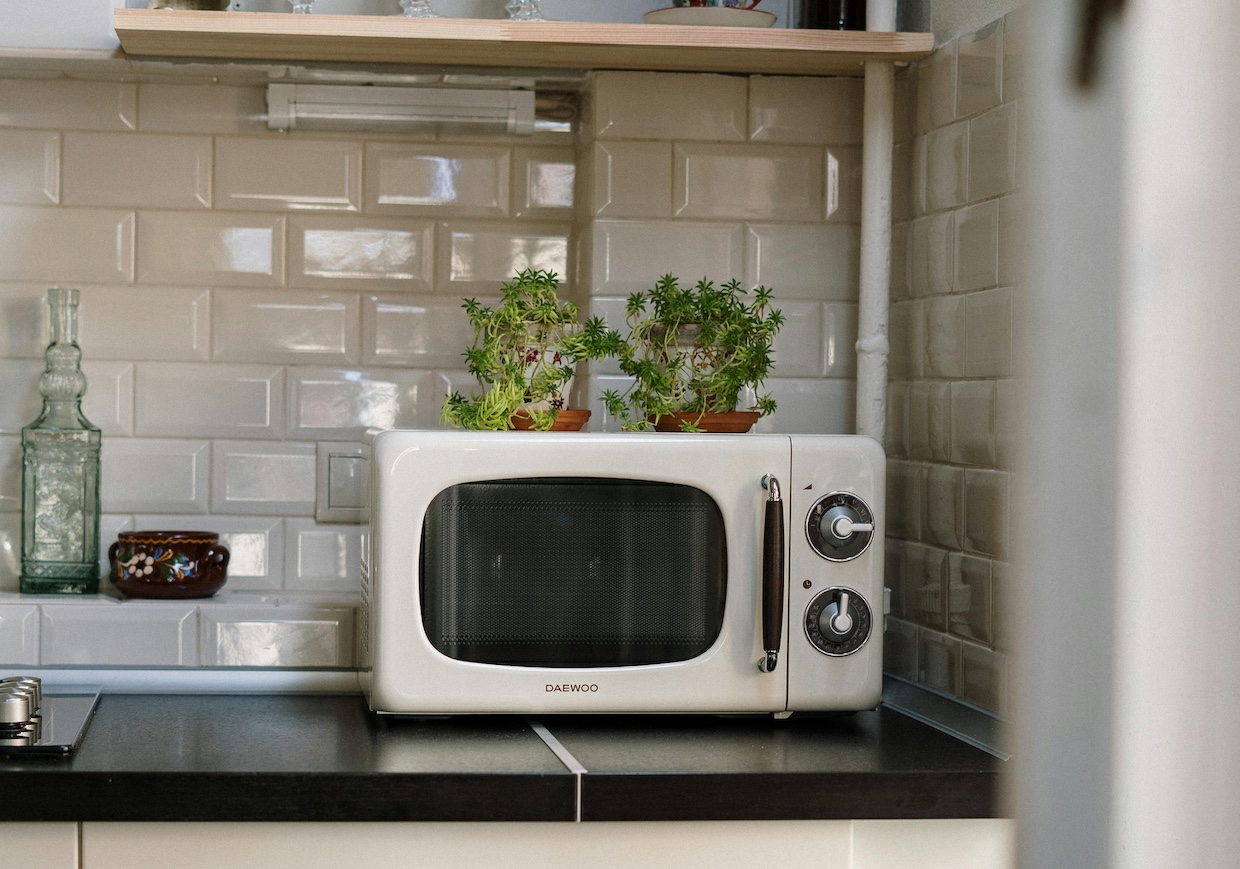
From Melted Candy Bar to Smart Kitchen Hub: The Wild History of Your Microwave!
That magical box on your kitchen counter, the one that zaps your leftovers to steaming perfection in mere seconds? It harbors a history far stranger, more serendipitous, and frankly, more explosive than you might ever imagine. We take its ubiquitous presence for granted, yet this unsung hero of convenience has a story that begins not in a pristine lab, but with a melting chocolate bar and, rather dramatically, an exploding egg!
At its core, this kitchen marvel is a master of electromagnetism. It generates electromagnetic radiation—microwaves, specifically—that causes water molecules within your food to vibrate rapidly. This molecular dance generates friction, and thus, heat, from the inside out (or, more accurately, from the outside-in, about 1cm deep, but we’ll get to that!). It’s a remarkable feat of physics in your daily life. So, prepare yourself for a journey through accidental discoveries, industrial-sized behemoths, and a few shocking truths as we delve into the curious chronicles of your favorite quick-cooker.
Before the “Zap!”: A Whirlwind History Lesson
The Genesis (Pre-Oven Days – Seriously!)
Before the familiar “ding!” graced our kitchens, the concept of high-frequency heating was already stirring scientific curiosity. Believe it or not, as early as the 1920s and 30s, high-frequency radio waves were being explored for applications beyond communication. Think medical diathermy—using electromagnetic fields to generate heat within body tissues for therapeutic purposes. This early dabbling even led to fascinating public demonstrations of “radio cooking” at the 1933 Chicago World’s Fair. Imagine the awe, and perhaps a touch of trepidation, as visitors witnessed food being cooked by invisible waves, a true glimpse into a futuristic kitchen that was still decades away.
The Secret Weapon & The Sweet Accident
The true catalyst for the microwave oven, however, emerged from a far more pressing need: World War II. It was during this period, around 1940, that British scientists developed the cavity magnetron. This ingenious device, capable of generating powerful microwaves, became the heart of radar systems, fundamentally transforming naval and aerial warfare. It was a crucial, albeit unsung, hero of the war effort.
Fast forward to 1945, and we find American engineer Percy Spencer at Raytheon, working diligently on active radar equipment, likely refining these very magnetrons. It was a mundane day until he noticed something utterly peculiar: a candy bar in his pocket had melted. Not just softened, but melted. His scientific curiosity, a hallmark of true innovation, immediately seized upon this anomaly. Intrigued, he tried placing popcorn kernels near the active magnetron – success! They popped with remarkable vigor. Encouraged, he then, with perhaps a touch of mischievous curiosity, placed an egg. The results were, shall we say, more dramatic: the egg exploded. In that moment of serendipitous discovery and subsequent experimental inquiry, the microwave oven was, quite literally, born. Raytheon, recognizing the profound potential, swiftly patented Spencer’s incredible discovery, setting the stage for a culinary revolution.
The Behemoth Era: When Microwaves Were Monsters
The first commercial microwave oven, dubbed the “Radarange,” arrived in 1947, and it was anything but a sleek countertop appliance. Picture this: a machine almost 6 feet tall, weighing a staggering 750 pounds, and water-cooled to boot! Its price tag was equally formidable, costing between $2,000 and $3,000—the equivalent of a luxury car at the time, or roughly $28,000-$42,000 in today’s money. Unsurprisingly, these colossal units weren’t destined for suburban homes. Instead, they found their niche in places like bustling restaurant kitchens, ship galleys, and large industrial cafeterias, where their sheer power and speed could justify the monumental investment. It was an exclusive club, indeed.
From Commercial Giant to Kitchen Staple
The journey from commercial leviathan to household necessity was a gradual one. Throughout the 1950s and early 60s, while early home models like Tappan’s 1955 offering appeared, they remained largely out of reach for the average consumer due to their prohibitive size and cost. A crucial innovation arrived in the mid-1960s from Sharp Corporation: the turntable. This deceptively simple addition finally addressed the Achilles’ heel of early microwaves—uneven heating—by continuously rotating the food, ensuring a more consistent cook. Revolutionary!
The real turning point for the masses came in 1967 when Amana (then owned by Raytheon) launched the first truly popular countertop Radarange, priced at a relatively affordable $495. This marked the beginning of its democratization. As technology advanced and manufacturing costs plummeted through the late 70s and 90s, microwave ovens became increasingly accessible. By the late 1990s, this once-futuristic gadget had infiltrated over 90% of US households. From a military secret to a luxury item, and finally to a ubiquitous kitchen hero, the microwave’s ascent was nothing short of meteoric.
The Love-Hate Relationship: What We Think Today
Why We Can’t Live Without It
Despite its quirky origins, the microwave has firmly cemented its place in our hearts and homes, primarily for two undeniable reasons. First, and perhaps most obviously, is its unparalleled speed and convenience. In our ever-accelerating lives, the ability to reheat last night’s gourmet creation, defrost ingredients in a flash, or whip up a quick breakfast in a minute or two is nothing short of a miracle. It’s the ultimate tool for instantaneous gratification in the kitchen, a true enabler of our modern, hurried lifestyles.
Beyond mere speed, the microwave possesses some remarkable specialty superpowers. It excels at tasks where conventional methods often fail, or at least require more vigilance. Melting butter or chocolate to a smooth, unburnt consistency, for instance, is a joy with a microwave. Preparing perfect, lump-free porridge or creamy polenta without constant stirring becomes almost effortless. It might not be a culinary maestro for every dish, but for these specific, often finicky tasks, it is an indispensable ally.
Debunking Myths & Minor Grumbles
Of course, no beloved appliance comes without its share of folklore and minor annoyances. Let’s address a couple of common ones.
First, the pervasive “inside out” cooking myth. Many believe microwaves heat food from the core outwards. The scientific reality, however, is a tad more nuanced. Microwaves typically penetrate only about 1 to 1.5 centimeters into most foods. The rest of the heating occurs through conduction, as heat from the outer, directly microwaved layer gradually transfers to the center. So, while it feels quick, it’s not quite an “inside-out” phenomenon.
Then there are the more relatable, everyday frustrations, often revolving around the control panel conundrums. Does anyone truly understand all those obscure buttons and pre-programmed settings? It often feels as though one needs a pilot’s license to navigate the labyrinthine interfaces of some models. The simple “start” and “stop” are clear enough, but for anything more complex, a brief moment of bewildered staring at the panel is a common, shared experience.
Sparking Debates: The Controversies & What’s Really Safe
The microwave, with its invisible waves and rapid heating, was bound to generate its share of public anxiety and scientific scrutiny. Understanding these concerns, and separating fact from fiction, is crucial for any intellectual appreciation of this technology.
The Radiation Scare (and why it’s mostly bunk)
In its early days, the very word “radiation” triggered understandable alarm. People worried about food becoming radioactive, or about harmful emissions leaking from the appliance. These early fears, though largely unfounded with modern appliances, were a natural response to a new and powerful technology.
The truth is reassuringly simple: modern microwaves are meticulously designed and rigorously shielded. The “radiation” they emit is non-ionizing radiation—think radio waves or visible light, not X-rays or gamma rays. This type of radiation doesn’t have enough energy to break molecular bonds or damage DNA, which is what makes ionizing radiation dangerous. Furthermore, microwave ovens operate at extremely low, federally regulated power levels, far below anything that could pose a health risk. So, rest assured, your food won’t turn radioactive, and standing near a working microwave is perfectly safe.
Real-World Cautionary Tales (Stuff to Actually Watch Out For)
While the broad radiation scare is largely debunked, there are indeed specific scenarios where caution is warranted. These are not about mythical dangers, but observable physical phenomena that can be genuinely hazardous:
- The Exploding Water Trick: This is perhaps the most notorious and genuinely dangerous microwave phenomenon. Plain water, especially in a smooth-sided cup, can become “superheated” beyond its boiling point without actually bubbling. When disturbed—by adding a teabag, a spoon, or even just moving the cup—it can instantaneously flash into steam, leading to a violent, explosive boil that can cause severe burns. Always stir carefully, or add a non-smooth object like a wooden stick to provide nucleation sites before heating plain water for extended periods.
- Metal Mayhem: The adage “no metal in the microwave” is a good general rule, but it’s not entirely black and white. Smooth metal containers can sometimes be used safely if explicitly stated by the manufacturer (e.g., some convection-microwave combos). However, pointed forks, crumpled aluminum foil, or thin metal films (like those found on some takeout containers) are absolute no-gos. These can cause intense electric arcing (sparks!), leading to damage to the magnetron and even potential fire. And on a related note, never run your microwave empty; the microwaves need something to absorb them, otherwise they can reflect back to the magnetron and damage it.
- Plastic Panic: Not all plastics are created equal. Using non-“microwave-safe” plastic containers can be problematic, as certain types can melt, warp, or, more concerningly, leach potentially harmful chemicals (like BPA or phthalates) into your food when heated. Always check for the “microwave-safe” label.
- The Cold Spot Conundrum: Despite advancements like turntables, uneven heating remains a reality. Microwaves can leave “cold spots” in food, particularly in denser items. These unheated areas can be breeding grounds for bacteria, especially in dishes like casseroles or poultry. The solution is simple: stir your food halfway through cooking, allow it to stand for a few minutes after heating to let heat distribute, and for critical items, use a food thermometer to ensure safe internal temperatures.
- Wi-Fi Woes: This is less about danger and more about a minor, modern-day annoyance. Ever notice your Wi-Fi signal dropping when the microwave is running? This isn’t coincidence. Both microwaves and many Wi-Fi routers operate on the 2.45 GHz radio frequency band, leading to potential interference. It’s a small price to pay for perfectly heated leftovers, but an interesting demonstration of the unseen forces at play in our smart homes.
Zapping into the Future: What’s Next for Our Microwaves?
The journey from a giant commercial apparatus to a countertop staple has been remarkable, but the evolution of the microwave oven is far from complete. As technology progresses and our culinary demands shift, the microwave is continuously adapting, moving beyond its basic “zap” function.
Beyond Basic Zapping: The Multi-Talented Marvels
We’re witnessing the rise of combination cooking appliances. These aren’t just microwaves; they’re hybrid powerhouses that integrate grilling, air frying, and convection baking alongside traditional microwaving. This allows for significantly more versatile cooking, achieving browning, crisping, and more conventional oven-like results without requiring multiple dedicated appliances. Furthermore, an increasing focus on wellness is leading to the integration of healthy options, such as steam cooking functions, allowing for gentler preparation of vegetables and fish.
Smart & Savvy Microwaves
The “smart home” revolution is inevitably reaching our microwaves. Sensor cooking is becoming more sophisticated, with appliances that can detect the moisture content and temperature of your food, automatically adjusting cooking times and power levels for optimal results. No more guessing game! And, of course, smart connectivity means you can imagine starting your microwave from your phone on your commute home, or receiving alerts when your food is perfectly reheated, ready for your arrival. Integration with voice assistants and recipe apps will further streamline our kitchen routines.
Better Tech, Better Zaps
Under the hood, advancements continue to refine the core function of the microwave. Inverter technology, for instance, provides a more consistent, modulated power output at lower settings, rather than simply cycling the magnetron on and off. This results in more even cooking, fewer burnt edges, and better defrosting, preserving the texture and flavor of delicate foods. We’re also seeing practical design improvements like turntable-free designs, which maximize usable internal space and simplify cleaning – a welcome relief for many. Finally, with a growing emphasis on sustainability, manufacturers are focused on increased energy efficiency, developing smarter designs and implementing stricter standby power standards to reduce the environmental footprint of our zapping habit.
Conclusion: From Accidental Spark to Essential Smart Appliance
What a journey it has been for the humble microwave oven. From a melted candy bar in a pocket, sparking the curiosity of an engineer, to its initial manifestation as a fridge-sized, water-cooled monster reserved for commercial galleys, it has undergone a remarkable transformation. Today, it stands as a sleek, smart, and increasingly versatile kitchen companion, an indispensable tool for millions.
The microwave is far more than just a quick reheat device; it’s a testament to the power of accidental discovery, the ingenuity of scientific inquiry, and the continuous drive for innovation. It fundamentally altered our eating habits, our kitchen design, and our expectations for convenience. As we peer into the future, anticipating smarter, more versatile, and more energy-efficient models, one can only muse: what culinary marvel will this incredible invention zap up next? Its story, much like the energy it harnesses, continues to radiate outwards, ever evolving.