Beyond the Buzz: Decoding the Magic of Mobile Connectivity
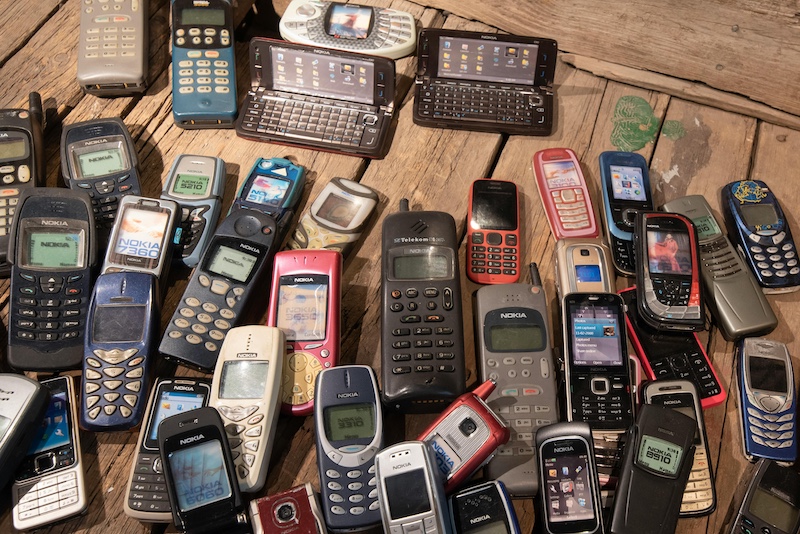
We tap, swipe, and talk with an almost unconscious fluidity, our smartphones responding to our whims with astonishing speed. It just works. But have you ever paused amidst the endless stream of notifications to truly contemplate the invisible ballet of technology that choreographs this everyday miracle? It’s a curious thing, this pocket-sized portal to the world. Imagine, if you will, the sheer effort required to shout a message across a crowded room and expect a clear reply. Now, scale that up to billions of people, sending voice, video, and data across continents in milliseconds. It’s less like shouting, and more like an unimaginably vast, super-smart postal service, meticulously sorting and delivering countless packages of information, instantly and wirelessly.
Today, let us embark on a whimsical, yet deeply insightful, journey. We’ll peel back the layers of this fascinating technology, from its rudimentary beginnings to its mind-bending future, using a few helpful analogies to illuminate the genius woven into the fabric of our mobile lives.
The Invisible Conversation: Your Phone’s Secret Language
At its heart, your sleek smartphone is a marvelously sophisticated two-way radio. Not the clunky, crackly kind you might imagine, but one that transfigures your voice, your photos, your very thoughts into ephemeral, invisible signals. These are radio waves – the very “invisible strings” that bind us in this connected age. They are, in essence, tiny, silent messages, too swift and subtle for our senses to perceive, yet constantly zipping through the air around us, carrying the weight of our digital lives.
And where do these messages go? Our world is intricately segmented into “cells,” each diligently served by a cell tower. Think of these towers as your neighborhood’s hyper-efficient local post office. As you move, your phone, with an intelligence we rarely acknowledge, seamlessly connects to the nearest, strongest “post office,” ensuring your “mail” (calls, texts, data) is always being handled.
But a local post office needs a larger system, doesn’t it? Once your “letter” arrives at the local tower, it’s whisked away to the Core Network. This, my friends, is the Grand Central Station, the veritable brain of the entire operation. It’s the central sorting facility that determines precisely where your call or data needs to go – whether it’s to a friend next door, a colleague across the ocean, or a server holding your latest streaming video. This colossal hub routes all the traffic, a master orchestrator ensuring every single message finds its correct recipient amidst a digital deluge.
A Walk Through Time: How Our Networks Grew Up
Our cell phone networks haven’t always been this sophisticated. Their evolution is a testament to human ingenuity, a relentless pursuit of better, faster, and more seamless connection. It’s been a fascinating “Generation Game” from basic “shouts” to rich “streams.”
In the 1980s, we had 1G, the original walkie-talkie of cellular communication. Imagine getting your first chunky, cordless car phone – loud, basic, and strictly for voice. It was like shouting across the street, an analog whisper, often with static, but undeniably a breakthrough at the time.
Then came 2G in the 1990s, a monumental leap. Suddenly, your walkie-talkie could send little typed notes – the birth of SMS! This was the era of digital calls and basic picture messages, allowing for new forms of interaction beyond just voice.
The early 2000s ushered in 3G, where the internet, albeit slowly, finally ventured into our pockets. It was a hesitant first step into a larger world. Remember the days of dial-up internet on your home computer? That’s precisely what early mobile internet felt like – slow video calls and rudimentary email access, a taste of what was to come.
The late 2000s and early 2010s gave us 4G, the undisputed streaming king. This was truly transformative. Your phone suddenly became a mini-computer with super-fast internet, opening the floodgates for YouTube, smooth video streaming, and online gaming. It was the era of untethered abundance, reshaping our digital habits forever.
And now, we live in the age of 5G (late 2010s/present) – the express delivery service of networks. It’s not just fast; it’s instant. Incredibly high speeds, almost imperceptible delay (latency), and the capacity to handle millions of devices simultaneously mark this generation as a crucial stepping stone to an even more connected future.
The Now: Our Hyper-Connected World
5G is rapidly cementing its global takeover, making our digital lives quicker and more reliable than ever before. But the story doesn’t end with faster phones. We are witnessing the rise of the Internet of Things (IoT), where everything, it seems, is talking. It’s no longer just your phone on the network; your fridge, smartwatch, security cameras, smart speakers, and even your car are all chatting away, each appliance, in a sense, getting its own tiny post office to send and receive vital messages. It’s a symphony of interconnected devices, each contributing to a vast, invisible data current.
This pervasive connectivity has, perhaps subtly, reshaped our expectations. We now demand to be “always on” – instant access to information, entertainment, and communication, anywhere, anytime. This isn’t just a convenience; it’s become a fundamental aspect of modern life.
The Bumps in the Road: Controversies and Concerns
Yet, with such pervasive, invisible magic, questions naturally arise. One persistent query revolves around health concerns (EMF): Are these radio waves, these invisible signals from our phones and towers, truly safe? It’s a natural human tendency to question the unseen. While the buzz around the invisible electromagnetic fields (EMF) persists, major health organizations worldwide consistently state that there is no conclusive evidence of harm at levels below established international guidelines. Much like the Wi-Fi waves in your home, these emissions are monitored, and extensive research continues, but the consensus remains reassuring.
Then there’s the thorny issue of privacy. So much of our personal data flows through these immense networks. Who has access to it? How is it used? And, crucially, how is it protected? It’s like wondering who at the “postal service” has access to read the contents of your “letters” – your most personal data. This presents a delicate balance between the utility of hyper-convenience and the vulnerability of constant data exchange.
And finally, we confront the digital divide: a poignant reminder that not everyone gets express mail. Fast, reliable networks remain an unevenly distributed luxury. Rural areas, lower-income communities, and developing nations often lack access to the high-speed connectivity that has become essential for education, commerce, and social participation. Some neighborhoods have a super-fast express post office, while others might barely have a local drop-box, limiting access to truly essential services.
Beyond Tomorrow: The Future is Calling!
The human quest for connection is ceaseless, and the horizon is already shimmering with possibilities. We’re already dreaming of 6G, anticipated for the 2030s. The vision extends beyond mere speed, aiming for even lower latency and an unprecedented integration of AI. Imagine a network so intelligent it anticipates your needs, perhaps even delivering holographic messages instead of just video calls. This “postal service” might become so prescient it knows you need stamps before you even ask!
This future vision sees the network transforming into a ubiquitous nervous system, not just for phones, but for everything. It will be the intelligent substrate underpinning smart cities, self-driving cars, advanced robotics, and groundbreaking healthcare innovations.
And to ensure no one is left behind, satellite communication is poised to bridge the remaining gaps. With constellations of satellites orbiting high above, they can act as “postmen” delivering messages even where no terrestrial cell towers exist. This promises truly global reach, ensuring that even if there’s no local post office, a satellite can still connect you, no matter where you are on Earth.
The Unending Evolution of Connection
From the rudimentary “shouts” of 1G to the hyper-connected, intelligent global brain that 6G promises to be, cell networks are an astonishing marvel of human ingenuity. This evolution is far from over; it’s an ongoing narrative of innovation, pushing the boundaries of what’s possible.
So, the next time your smartphone rings or your feed refreshes in an instant, take a quiet moment to appreciate the ingenious choreography, the invisible ballet, and the intricate, ever-evolving magic that makes it all happen. It’s a powerful testament to our unending desire to connect, to communicate, and to understand the world, and each other, a little better.